
If you’ve ever wondered, “why does my cat bite me?” you’re not alone. Many cat owners experience this confusing behavior, where a calm pet suddenly turns into a tiny attacker. Understanding why cats bite their owners is essential to building a stronger, safer bond with your feline companion.
In this guide, we’ll break down the real reasons behind cat biting behavior, what your cat is trying to communicate, and how you can respond effectively without damaging trust.
Understanding Cat Biting Behavior
Cats are complex animals with unique ways of communicating. Unlike dogs, they don’t always use obvious signals. When a cat bites, it’s rarely out of aggression alone. It’s usually a form of communication.
Common meanings behind cat biting include:
- Overstimulation
- Play aggression
- Fear or stress
- Attention-seeking
- Medical discomfort
Learning to interpret these signals is the first step toward understanding cat biting behavior and preventing future incidents.
Why Does My Cat Bite Me Suddenly?
One of the most common complaints is when a cat seems affectionate one moment and bites the next. This sudden shift can feel unpredictable, but there’s usually a clear reason behind it.
1. Overstimulation During Petting
Cats have a threshold for touch. While they may enjoy petting initially, too much stimulation can overwhelm them.
Signs your cat is overstimulated:
- Tail flicking rapidly
- Ears turning sideways or back
- Skin rippling on their back
- Sudden tension in the body
When these signals are ignored, a bite becomes their way of saying, “That’s enough.”
2. Play Aggression
Kittens and young cats often learn hunting behaviors through play. If they weren’t properly trained as kittens, they may see your hands as toys.
Examples of play aggression:
- Pouncing on hands or feet
- Gentle to moderate biting during play
- Chasing moving objects like toes under blankets
This type of cat biting means your cat isn’t angry, they’re just playing the wrong way.
3. Fear or Anxiety
Cats in stressful environments may bite defensively. Loud noises, unfamiliar visitors, or sudden movements can trigger this reaction.
In suburban areas, where homes can be busy with family activity or guests, cats may feel overwhelmed if they don’t have a quiet space.
Fear-based biting often includes:
- Hissing or growling beforehand
- Flattened ears
- Attempting to escape
4. Redirected Aggression
Sometimes your cat is upset about something else—like seeing another animal outside—but can’t reach it. Instead, they redirect that frustration toward you.
This is one of the more surprising reasons cats bite their owners.
5. Attention-Seeking Behavior
Yes, even negative behavior can be a way to get attention. If your cat learns that biting gets a reaction, they may repeat it.
Typical scenarios include:
- Biting when you stop petting
- Nipping while you’re working or using your phone
- Interrupting routines
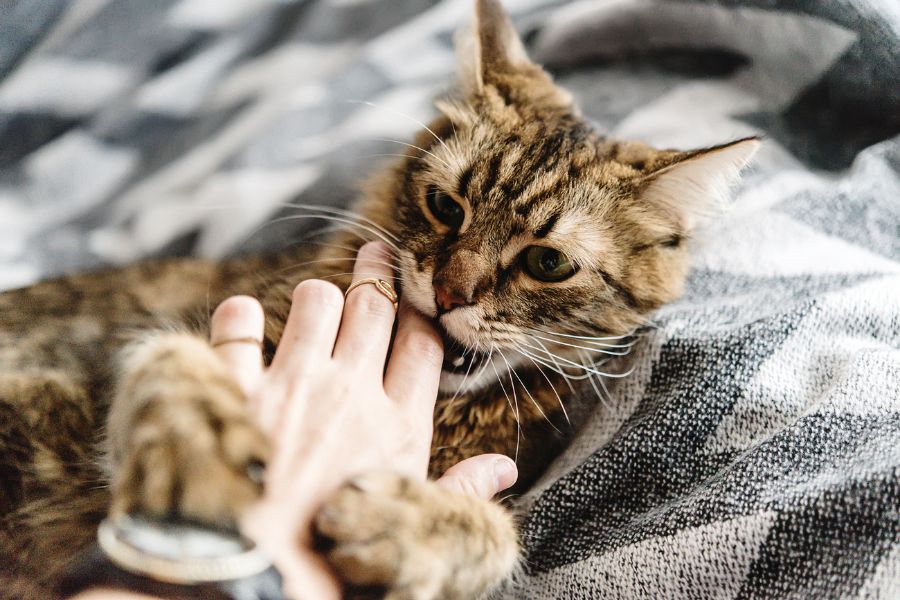
What Does It Mean When a Cat Bites You Gently?
Not all bites are harmful. Some cats give “love bites,” which are gentle nips that don’t break the skin.
Cat biting means different things depending on intensity:
- Gentle nibble: Affection or grooming behavior
- Light bite with pressure: Mild irritation or warning
- Hard bite: Fear, pain, or overstimulation
Understanding these differences helps you respond appropriately without overreacting.
How to Stop Your Cat from Biting
If you’re dealing with frequent biting, the goal isn’t punishment—it’s redirection and understanding.
1. Learn Your Cat’s Body Language
Prevention starts with recognizing early warning signs. Stop interaction before your cat reaches the biting stage.
2. Avoid Using Hands as Toys
Never encourage your cat to play with your hands, especially as a kitten.
Instead, use:
- Feather wands
- Laser pointers
- Interactive toys
This teaches your cat what’s appropriate to bite.
3. Redirect Behavior
When your cat tries to bite, calmly redirect them to a toy. Over time, they’ll associate biting with appropriate objects instead of your skin.
4. Create a Calm Environment
Cats thrive in predictable environments.
Helpful tips:
- Provide a quiet resting space
- Maintain a consistent feeding schedule
- Limit sudden loud noises
5. Don’t Punish Your Cat
Punishment can damage trust and increase fear-based aggression. Instead, use positive reinforcement when your cat behaves calmly.
When Cat Biting Could Signal a Health Problem
Sometimes, biting isn’t behavioral—it’s medical. If your cat suddenly starts biting more than usual, it may indicate pain or discomfort.
Possible causes include:
- Dental disease
- Arthritis
- Skin sensitivity
- Internal illness
If your cat bites me, incidents increase unexpectedly, it’s wise to schedule a check-up. A professional evaluation at Harvester Veterinary Hospital of Burr Ridge can help rule out underlying issues and ensure your cat stays healthy.
Tips for Families with Children
If you have kids at home, teaching them how to interact with cats is crucial.
Important guidelines:
- Never pull a cat’s tail or ears
- Avoid disturbing a resting cat
- Teach gentle petting techniques
- Supervise interactions
This reduces the risk of bites and helps children build respectful relationships with pets.
Building a Stronger Bond with Your Cat
Understanding cat biting behavior isn’t just about stopping bites—it’s about improving communication.
Ways to strengthen your bond:
- Spend time in interactive play
- Respect your cat’s boundaries
- Offer treats for calm behavior
- Learn your cat’s personality
Over time, you’ll notice fewer biting incidents and a more trusting relationship.
Conclusion
If you’ve been asking yourself, “why does my cat bite me?”, the answer lies in communication. Cats bite their owners for many reasons—play, overstimulation, fear, or even health concerns. By learning to read your cat’s signals and responding appropriately, you can prevent unwanted behavior and create a more peaceful home.
If you are a cat owner in Burr Ridge and your cat’s biting becomes frequent or severe, don’t ignore it. A professional evaluation can uncover hidden health issues and guide you toward effective solutions. Book an appointment at Harvester Veterinary Hospital of Burr Ridge today to ensure your cat’s behavior and health are on the right track.
FAQs
Q1: Why does my cat bite me when I pet them?
Ans: Cats often bite during petting due to overstimulation. When they’ve had enough, a bite is their way of signaling you to stop immediately.
Q2: Is it normal for cats to bite their owners?
Ans: Yes, it’s common. Cats bite their owners as a form of communication, whether for play, attention, or expressing discomfort.
Q3: How can I tell if my cat’s biting is aggressive?
Ans: Aggressive biting usually includes hissing, flattened ears, and tense body posture, often caused by fear, stress, or pain.
Q4: What should I do immediately after my cat bites me?
Ans: Stay calm, avoid reacting aggressively, and gently remove yourself. Redirect your cat’s attention to a toy instead of punishing them.
Q5: Can medical issues cause cats to bite more?
Ans: Yes, pain or illness can increase irritability. Sudden changes in behavior should be evaluated by a veterinarian to rule out health problems.