
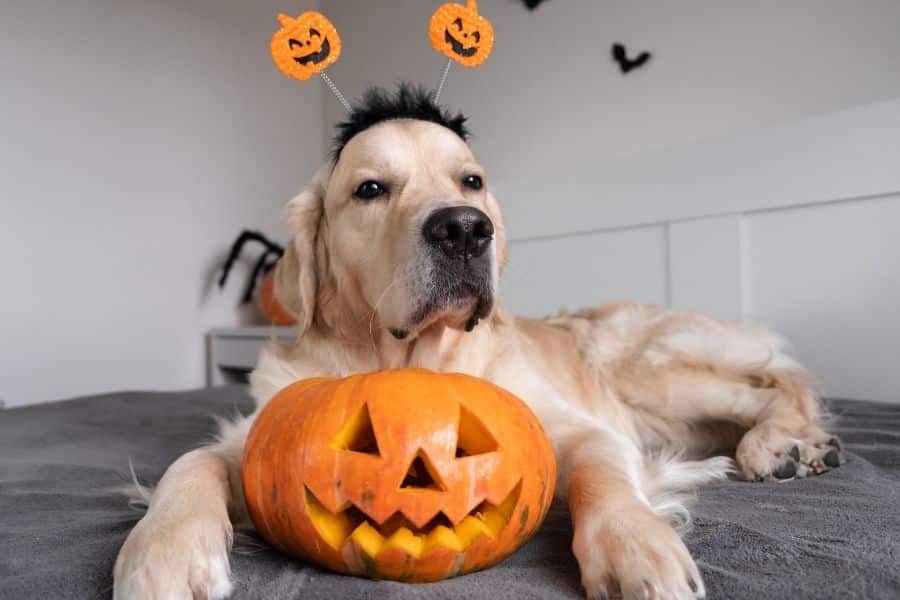
Most dog owners know that chocolate is a Halloween hazard. Fewer know about the other nine things on this list, and some of them are more likely to send a dog to the veterinarian than the candy bowl is. Hidden Halloween dangers for dogs go well beyond the obvious food risks and include decorations, behavioral triggers, environmental hazards, and physical risks that affect even dogs who never get near a piece of candy. Halloween is consistently one of the highest-volume nights of the year for pet-related veterinary cases, and the majority of them involve hazards the owner had not specifically thought to look for. This guide identifies the ten most common and most underestimated risks so you can walk into Halloween night with a clear-eyed view of what needs to be addressed.
The 10 Hidden Halloween Dangers for Dogs
1. Xylitol in Sugar-Free Candy
Chocolate gets all the attention, but xylitol is the more immediately life-threatening Halloween toxin for dogs. Found in sugar-free gummies, mints, breath strips, and some specialty Halloween treats, xylitol causes a rapid and dangerous drop in blood sugar within 30 minutes of ingestion. Liver failure can follow within 24 to 72 hours. Toxic Halloween items for dogs containing xylitol appear in every candy assortment, often in products labeled “sugar-free” that owners would not immediately recognize as dangerous. Read ingredient labels on every candy type in the house.
2. Raisins and Dried Fruit Treats
Trail mix packets, yogurt-covered raisins, and fruit-and-nut chocolate bars are common in Halloween assortments and appeal to owners who think they are making a healthier choice in the candy bowl. Raisins and grapes are acutely toxic to dogs through a mechanism that is still not fully understood. The absence of a clear toxic threshold is what makes this especially dangerous: some dogs develop kidney failure from a small amount, while others eat more and show milder symptoms. No amount is safe.
3. Candy Wrappers and Lollipop Sticks
What Halloween hazards dogs owners miss most consistently is the physical hazard of the packaging itself. Candy wrappers attract dogs through smell, and foil, cellophane, and paper wrappers can cause intestinal obstruction or irritation if swallowed. Lollipop sticks are a common foreign body ingestion item in October. A stick that makes it past the stomach into the small intestine can cause a puncture that requires surgical intervention.
4. Synthetic Spider Webs
Decorative fake spider webs are one of the most widely used Halloween decorations and one of the least recognized pet hazards. The stretched synthetic fiber used in these webs does not break down in the digestive system. Cats are more commonly affected than dogs, but smaller dogs who investigate and mouth the material can ingest enough to cause a blockage. Replace with fabric-based or paper alternatives.
5. Open-Flame Candles
A lit jack-o-lantern on the front porch is charming. The same candle inside a pumpkin placed at floor level near a curious dog is a burn and fire risk. Dogs investigate through their noses, which means the face and muzzle are what contact a flame first. An overturned candle near dry fabric decorations or a pile of leaves creates a fire risk within seconds. Battery-operated LED candles eliminate this entirely.
6. Motion-Activated Decorations
Decorations that produce sudden sounds, lights, and movement are designed to startle. For dogs, especially those already managing low-grade anxiety, repeated unexpected startles over the course of an evening cause significant stress hormone accumulation. Dog safety tips for Halloween night consistently include removing or relocating motion-activated pieces from areas dogs can access. A dog in full flight response from a suddenly screaming skeleton decoration can injure itself, knock over other hazards, and in some cases, bite out of fear reflex.
7. Essential Oil Diffusers With Fall Scents
Seasonal essential oil diffusers are popular for creating Halloween and fall ambiance, and many common seasonal scent blends contain compounds that are directly toxic to cats and irritating to dogs. Cinnamon, clove, nutmeg, and pine appear in virtually every fall scent product. Dogs exposed to concentrated essential oil diffusers over an extended period can develop respiratory irritation and other systemic effects. Remove all diffusers from rooms dogs access during the Halloween evening.
8. The Front Door Escape Risk
What to watch for dog situations that end in a lost pet almost always involve one factor: a door that was open long enough for the dog to go through it during the activity and distraction of trick-or-treating. Halloween means the front door is opening and closing for two hours with a household that is distracted, often managing children and candy distribution at the same time. A dog that has never bolted before may do so on this night simply because the combination of opportunity and arousal is unique. Secure your dog in a back room before the first trick-or-treater arrives.
9. Costume Distress and Injury
Pet costumes are a Halloween staple, and the majority of dog costume incidents are not dramatic. But costume-related distress is genuinely common, and the injuries that result from it are underreported. A costume that restricts a dog’s range of motion creates frustration that can lead to frantic attempts to remove it. A dangling costume piece that gets stepped on and creates a sudden jerk on the neck or leg can cause injury in a larger dog moving quickly. What to watch for in a Halloween dog in costume: panting, lip licking, scratching at the costume, and refusal to move normally are all signs of discomfort that warrant removing the costume immediately.
10. Glow Sticks and Glow Jewelry
Glow sticks are distributed at virtually every Halloween event and dropped in every household that participates in trick-or-treating. Dogs who find a glow stick on the floor will often chew it. The liquid inside, dibutyl phthalate, causes intense oral irritation, frantic face rubbing, and copious drooling that looks alarming but is primarily a strong aversion response rather than a severe systemic toxicity. The more serious risk is the sharp plastic casing. Pieces of chewed glow stick casing can cause intestinal perforation. Collect all glow products before giving dogs unsupervised access to any room.
Why These Dangers Cluster on a Single Night
Hidden Halloween dangers for dogs are individually manageable throughout the year. The reason October 31st is such a high-risk night is that all of these hazards converge simultaneously in an environment of distraction and heightened activity.
Halloween hazards dogs owners miss are not missed because owners do not care. They are missed because the list is longer than most people realize and because the evening itself creates exactly the conditions under which vigilance is hardest: children’s excitement, repeated door answering, costume logistics, and a house full of guests or candy equipment.
Dog safety tips for Halloween night that are most effective address the environment before the evening starts, not after the first incident.
In Burr Ridge, IL, residential Halloween participation is high, which means an extended trick-or-treating window with high foot traffic and repeated door activity. Preparing the environment, securing the dog, and removing hazards before the evening begins eliminates the majority of these risks at once.
A Pre-Halloween Safety Checklist
Before October 31st, walk through your home with this list:
- All candy stored in a sealed container out of dog reach
- All open-flame candles replaced with battery-operated versions
- Synthetic spider webs removed from pet-accessible areas
- Small props and decorations elevated off the floor
- Essential oil diffusers and seasonal scent products removed from pet rooms
- Glow sticks collected and disposed of in a closed container
- Dog’s safe room set up and ready
- Veterinarian’s number and a pet poison hotline number saved to your phone
The vet team at Harvester Veterinary Hospital of Burr Ridge provides the kind of proactive veterinary care that helps pet owners stay ahead of predictable seasonal risks. Hidden Halloween dangers for dogs are preventable when you know what you are looking for. Book an appointment today.
Frequently Asked Questions
Q: Which of these 10 dangers is most commonly seen by vets on Halloween?
Ans: Candy ingestion, including chocolate and xylitol products, represents the highest volume of Halloween-related veterinary cases. However, the escape-through-door risk affects the largest number of pets in absolute terms, since lost pets vastly outnumber those treated for toxicity. Both are preventable with advance preparation.
Q: My dog ate a candy wrapper. What should I do?
Ans: Monitor your dog for vomiting, loss of appetite, abdominal distension, or failure to have a bowel movement within 24 hours. A small piece of thin wrapper may pass without incident in an adult dog. A larger piece, a lollipop stick, or a hard plastic item warrants a veterinary call for guidance on whether imaging is needed to confirm passage.
Q: Are glow stick injuries in dogs serious?
Ans: The liquid inside standard glow sticks causes dramatic oral irritation but is classified as low toxicity. The more serious concern is sharp plastic casing fragments, which can cause intestinal injury. If your dog chewed a glow stick, rinse their mouth with water and call your veterinarian to discuss whether the situation warrants an examination based on how much plastic casing may have been swallowed.
Q: Is there a safe way to use essential oil diffusers around dogs on Halloween?
Ans: The safest approach is to avoid diffusers in rooms dogs access during Halloween evening, particularly those with cinnamon, clove, nutmeg, or pine scents. If scent is important for ambiance, choose unscented candles or battery-operated options, and ensure the space is well ventilated if any scented product is in use.
Q: How do I know if my dog’s costume is causing distress?
Ans: Signs include panting when not warm, lip licking, trying to scratch or bite at the costume, freezing in place, refusing to move normally, flattened ears, or attempting to hide. Any of these signals mean the costume should be removed immediately. A themed bandana or collar achieves a festive look without the physical restriction that causes distress.